
How People Learned to Test an Idea
From watching light travel to challenging old explanations, science grew through many ways of asking one powerful question: how could we check?
In this article
- Watching is only the beginning
- Ibn al-Haytham and the behaviour of light
- There is no single magical recipe
- Three simple checks you can use today
- The real finale of Season Two
- A good question is not the same as a good test
- Ibn al-Haytham and light
- Printed claims need better checks, not automatic trust
- The best legacy is a question
- Sources and further reading
A bright idea can feel true. That does not make it true. Perhaps you have seen someone insist that a heavy object always falls faster than a light one, or that a strange effect must have a supernatural cause. How would you decide what to believe?
The answer seems obvious today: try to test the claim. But what counts as a fair test? What do you measure, and how do you avoid seeing only what you hoped to see? These questions have occupied thinkers across many cultures and centuries.
Watching is only the beginning
People have observed nature since long before the word “science” acquired its modern meaning. Farmers watched seasons; navigators followed the stars; builders learnt from failed structures. Observation provides clues, but one observation can have several explanations.
Suppose a shadow moves over a wall. You might conclude that the light source moved. Or perhaps the object casting the shadow moved. A useful investigation asks what would happen under each explanation — and then tries to create conditions that separate them.
The move from noticing a pattern to checking a proposed explanation is crucial. It makes an idea vulnerable to evidence.
Ibn al-Haytham and the behaviour of light
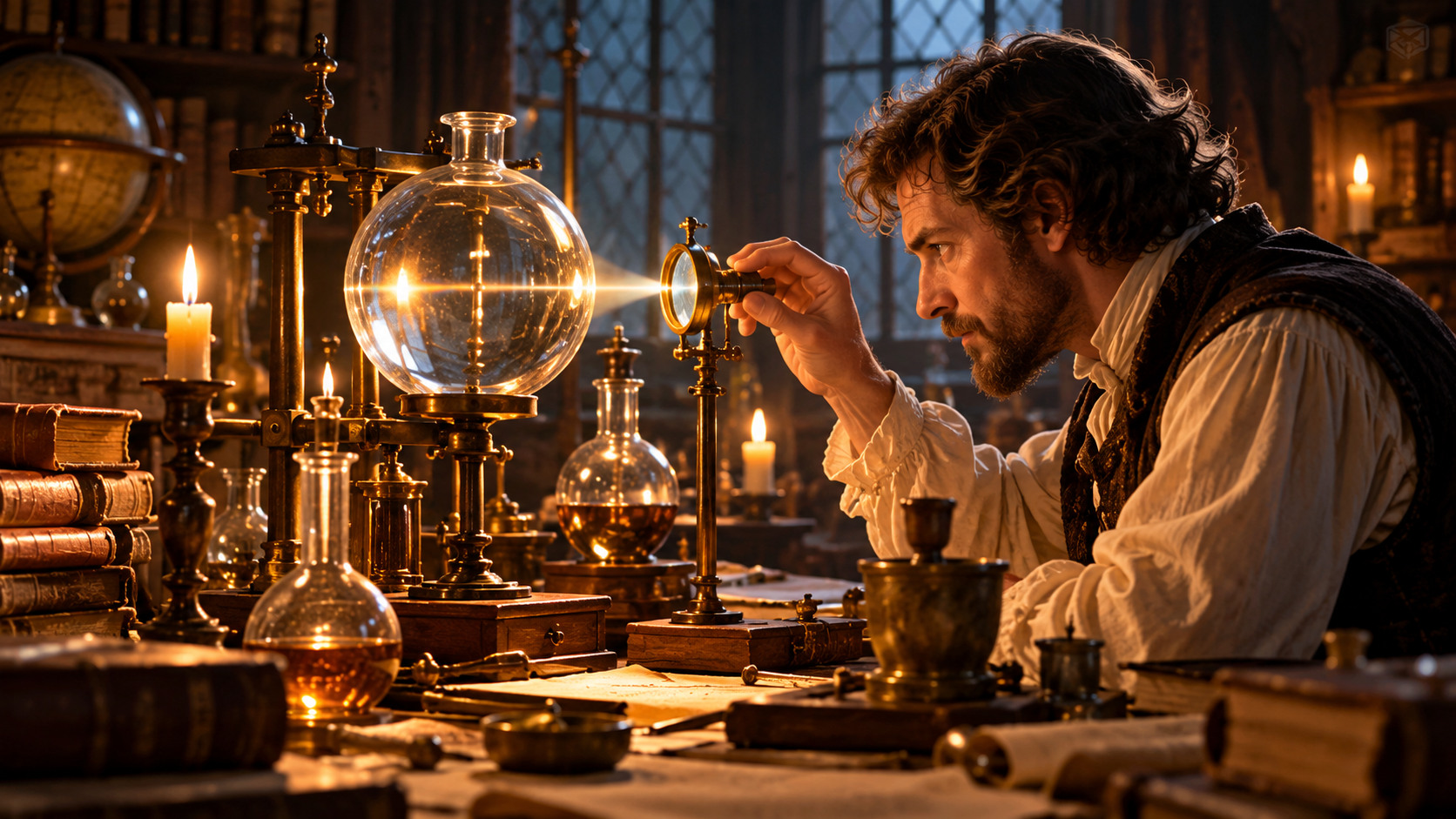
The scholar Ibn al-Haytham, who lived around 965–1040, investigated optics and other subjects. In his studies of light he used mathematical reasoning alongside carefully designed observations and experiments. UNESCO highlights his methods of testing explanations about the behaviour of light.
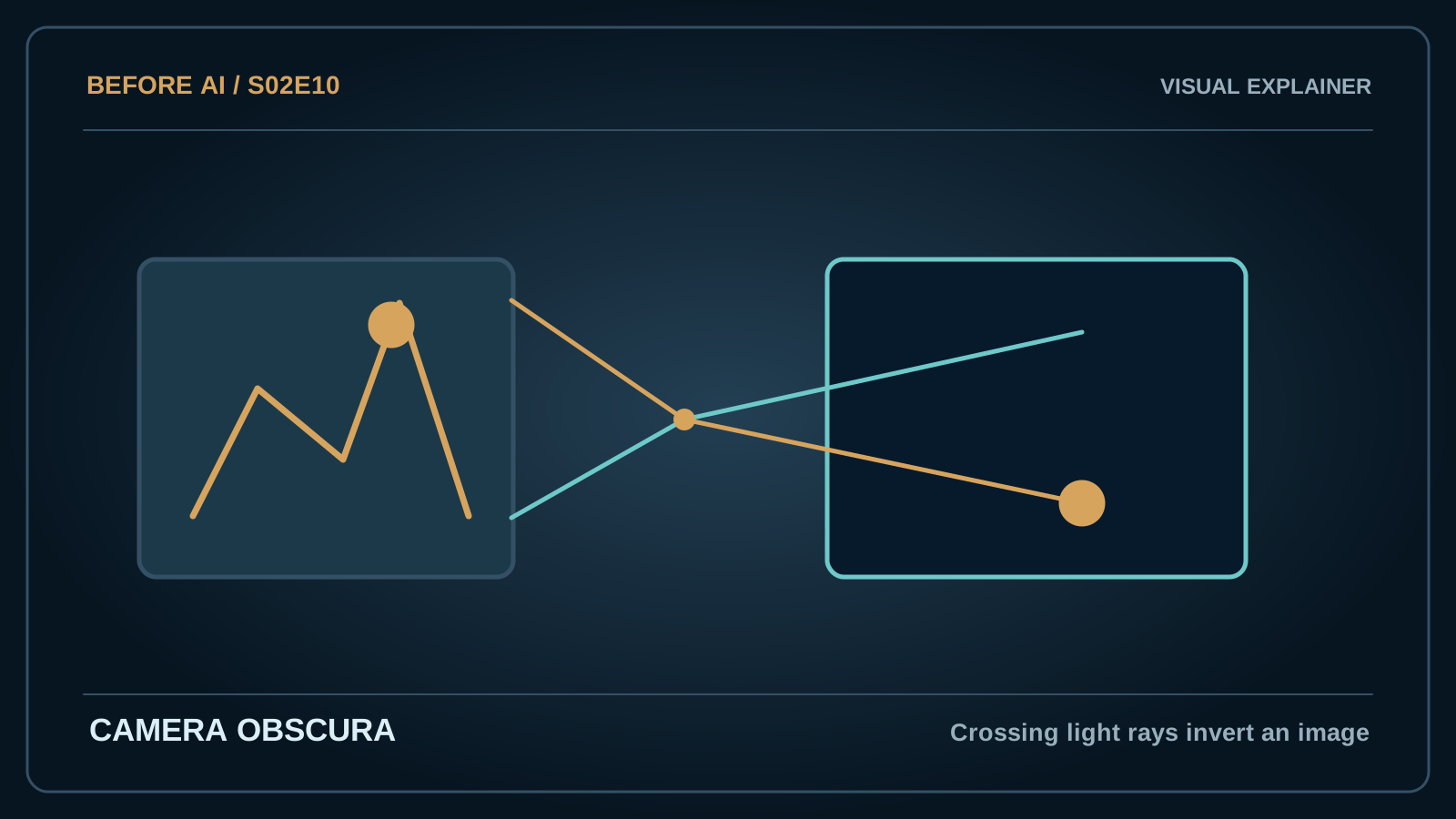
One question was how light travels. What happens when it passes through a small opening? What changes if you move the source or the screen? Controlled comparisons can reveal more than an attractive but untested theory.
It would be misleading to call Ibn al-Haytham the sole inventor of the scientific method. Earlier traditions included sophisticated observations, demonstrations and reasoning; later scholars changed how experiments and evidence were understood. His work is an important part of a much larger history.
There is no single magical recipe
In the seventeenth century, writers such as Francis Bacon argued for more systematic observation and methods to guard against mistakes in reasoning. Experimental work by people such as Robert Boyle also became influential. Later scientific communities developed journals, instruments, shared standards and procedures for questioning one another's results.
Even now, scientists do not all follow one fixed five-step recipe. A mathematician may prove a result; an astronomer may analyse observations that cannot be reproduced at will; a medical researcher may compare carefully designed groups. The Stanford Encyclopedia of Philosophy describes scientific method as a family of practices rather than a single universal script.
There are nevertheless habits that recur: make claims clear, record evidence, test explanations, identify uncertainty and change your mind when the result demands it.
Three simple checks you can use today
First, ask what the claim actually says. “This works” is vague; “this method reduced errors in this particular test” can be examined.
Second, ask where the evidence comes from. Is it a measurement, a carefully described observation, a repeated experiment or only somebody's confident statement? An impressive image or fluent AI-generated answer is not the same as evidence.
Third, ask what result would change the claim. If every possible outcome is treated as proof, the claim may not be testable in a useful way.
These questions do not make every decision easy. They help separate an appealing story from a reasoned conclusion.
The real finale of Season Two
Across this season we have met Roman surveyors, water clocks, mechanical calculators, algebra, zero, universities, clockmakers, navigators and printers. They were not all doing the same kind of work. Yet each story shows people making information more precise, more repeatable or easier to share.
Testing an idea adds the final essential piece: the freedom to find out that we were wrong. A measuring tool can be inaccurate. A calculation can contain an error. A printed explanation can spread a mistake as efficiently as a discovery.
Progress depends not only on inventing useful systems, but on questioning what those systems tell us. That is as important for a medieval scholar as it is for someone checking an AI answer today.
Season Two ends with a habit worth keeping: be curious enough to ask the question — and careful enough to check the answer.
A good question is not the same as a good test
Imagine that one type of seed seems to grow faster than another. Perhaps the difference comes from the seed — or perhaps one plant received more water or sunlight. A fair comparison needs to control the conditions as carefully as possible. The same challenge arises in testing a claim about light, motion, medicine or a new AI tool.
The useful habit is to ask what would count as evidence against your preferred explanation. If no possible result could change your mind, you may have a belief rather than a testable hypothesis.
Ibn al-Haytham and light
The medieval scholar Ibn al-Haytham (c. 965–1040) studied light and vision. His Book of Optics used mathematical reasoning alongside observation and carefully arranged experiments. UNESCO discusses his contributions to testing explanations about how light behaves. It would still be inaccurate to name one man as the sole inventor of the scientific method. People in different traditions had investigated nature and used practical tests for many centuries.
The stronger story is that questions became more precise. What happens when light passes through an opening? Which explanation predicts the pattern? Can the result be reproduced in a different setting? A method becomes useful when another person can understand what was done and try it again.
Printed claims need better checks, not automatic trust
A book can carry an accurate method or a persuasive error. The previous episodes of this season explored ways to record numbers, perform calculations, organise teaching and print pages. None of those tools guarantees that a claim is true. They make it easier for people to share ideas — good and bad.
Testing adds the power of correction. Scientists compare predictions with observations, publish methods, scrutinise conclusions and revise models. There is no single fixed recipe suitable for every research question; the Stanford Encyclopedia of Philosophy makes clear that debates over scientific methods continue.
The best legacy is a question
Modern technologies work because millions of claims have been checked, refined and sometimes rejected. An aircraft depends on tested materials and measurements; a medical device depends on evidence gathered under careful conditions; a weather forecast depends on observations compared with models.
AI presents a familiar challenge in a new form. A model can write a confident explanation even when the detail is wrong. We should therefore compare its statements with original sources, examine evidence and ask whether the method would produce the same result again. Curiosity without testing risks becoming credulity; testing without curiosity risks becoming routine.
That is a fitting finale for Before AI's second season: the road to powerful technology was built not only from machines and mathematics, but also from our growing willingness to check what we think we know.
Sources & Further Reading
The main illustration is AI-generated, not historical photographic evidence. The technical diagram is an original editorial illustration.